London, United Kingdom 2008
Units
10
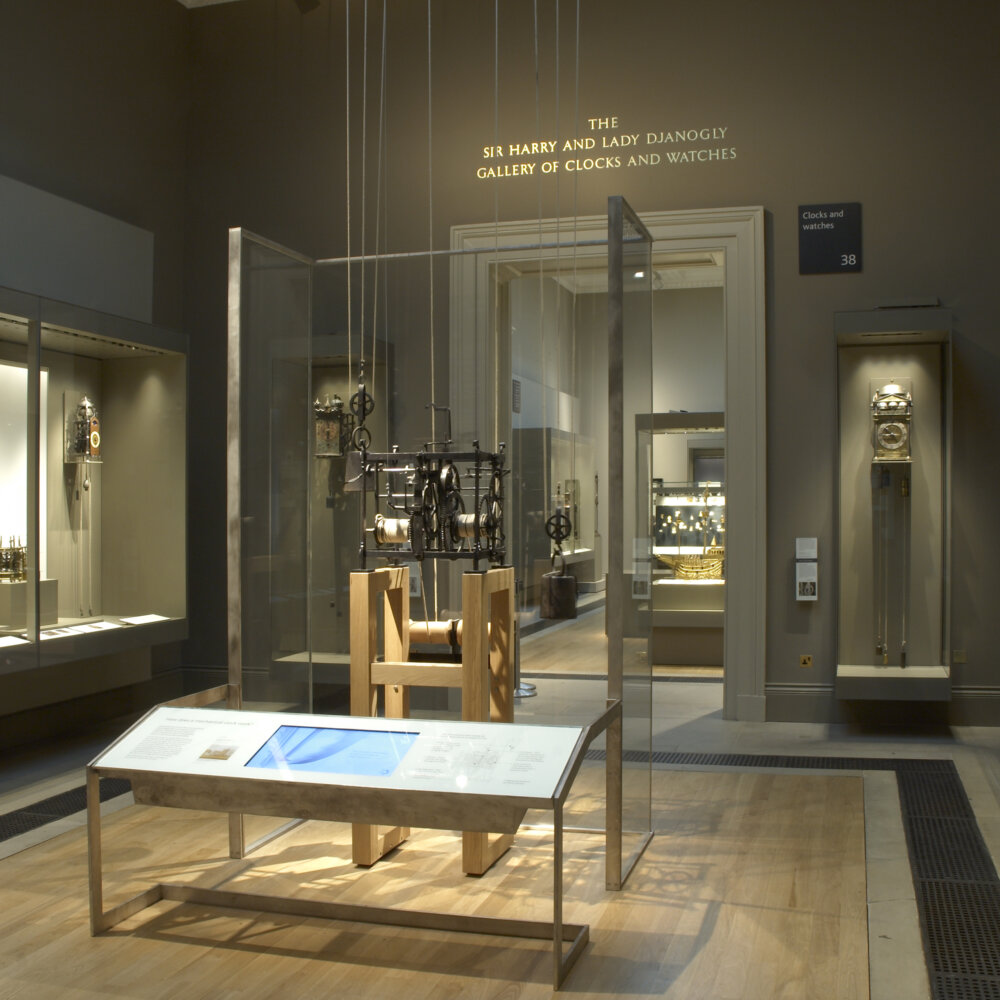
Mechanical clocks were invented in Western Europe in the medieval period. Rooms 38–39 trace their development from these earliest examples to modern quartz precision and radio control.
The exhibit design
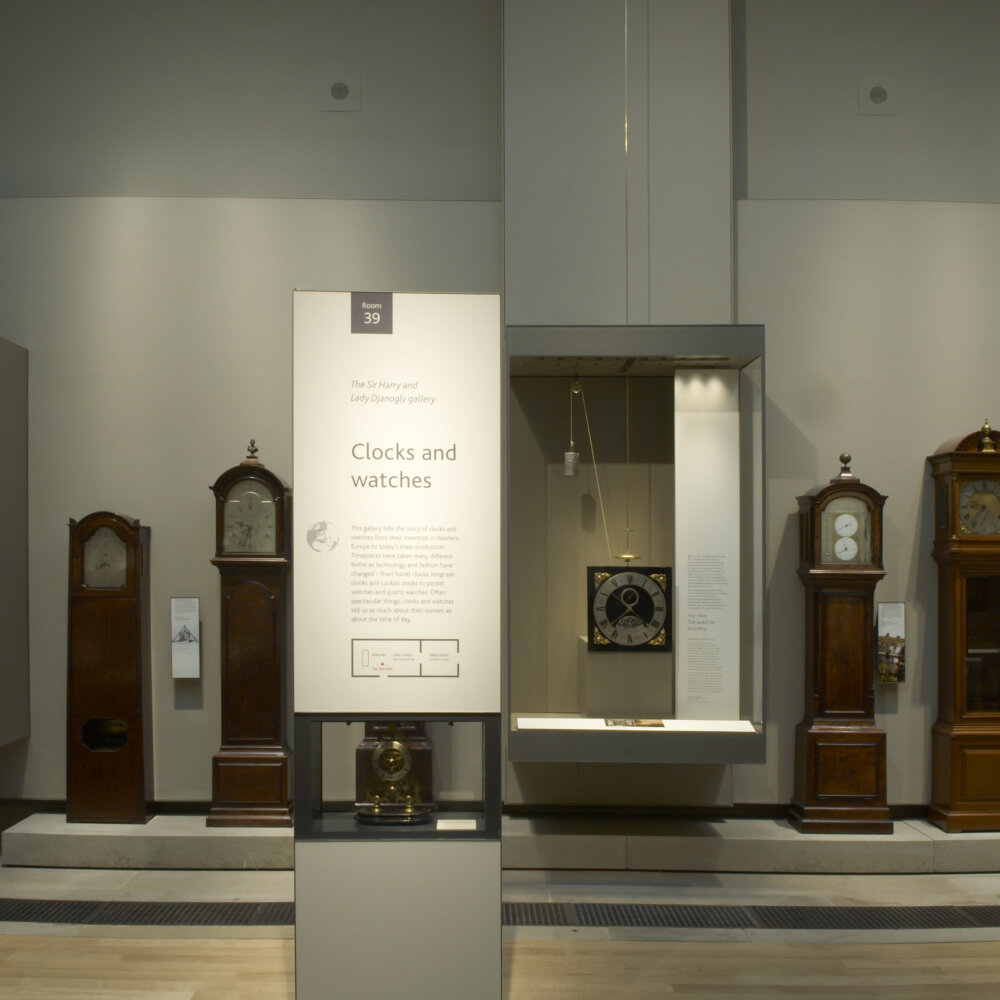
The gallery recounts the history and evolution of horology, starting with the first mechanical watches used in medieval churches and cathedrals, displaying a vast assortment ranging from complex and decorative domestic models, to maritime chronometers, mass-market products and the most modern precision instruments in use today. Many of the objects on display are in perfect working order: ticking, bells and chimes provide a lively background sound for the visit.
The display cases
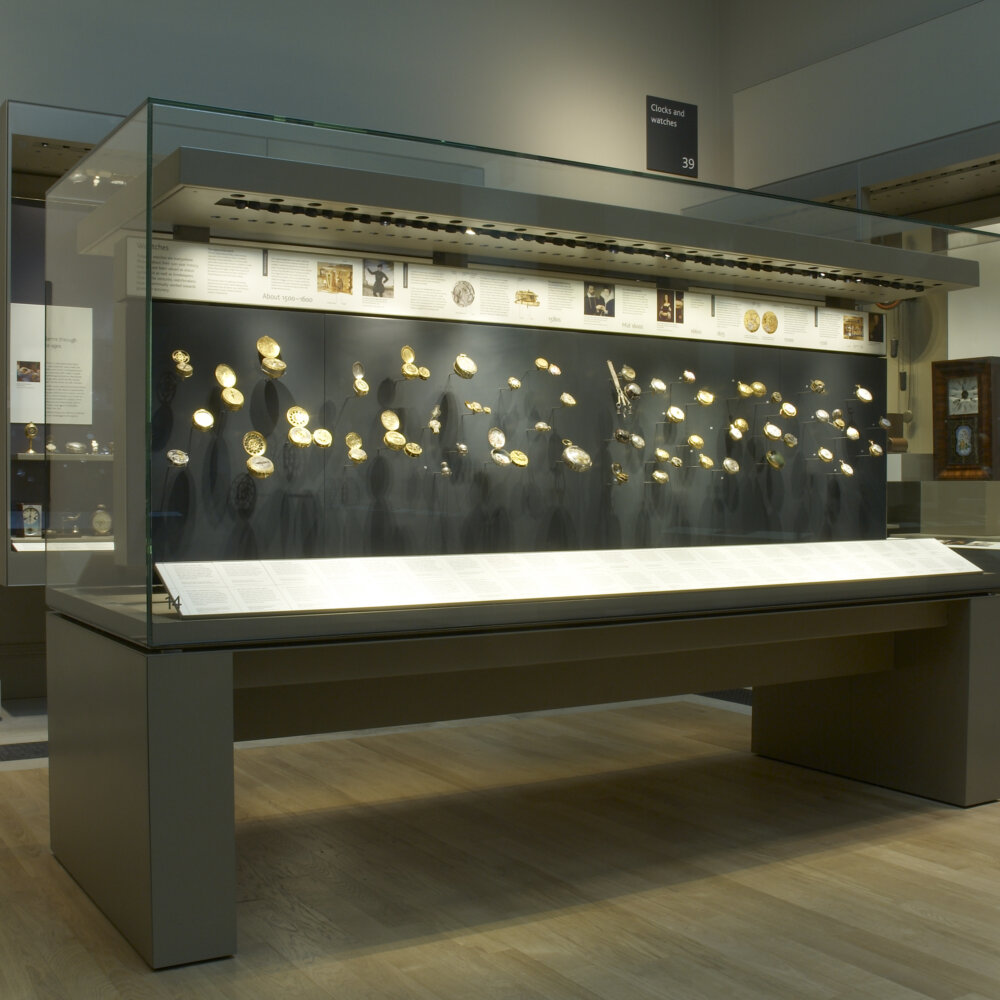
For the gallery, designed by the Museum's architect, Goppion has engineered and produced 9 wall-hung display cases and a large table-top display case, with pantograph lift, designed to house the smallest and most precious clocks. Equipped with fibre optic metal halide illuminators, the display cases have a high degree of tightness and safety thanks to the use of electric locks and electromagnets in the doors. The door is firmly held thanks to the resistance of the electronically activated magnet and is impossible to open unless the power is disconnected.
Gallery